
Agile Fundamentals
Master Agile concepts to deliver value faster
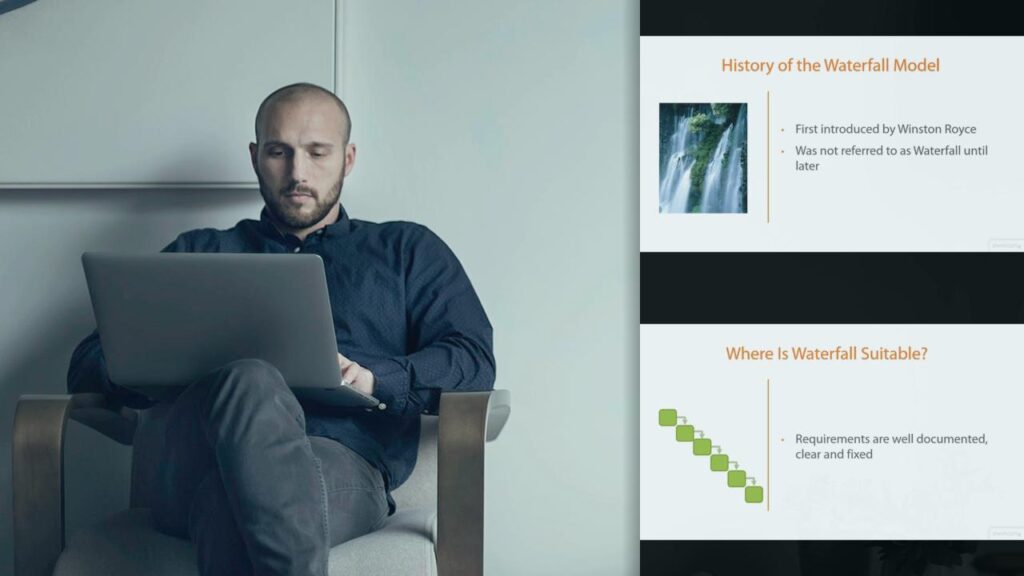
Agile Fundamentals is an introductory course that explains how Agile approaches improve team performance and customer value by contrasting iterative delivery with traditional models such as Waterfall and the V‑Model. Stephen Haunts guides learners through core Agile principles, common practices, and practical criteria for when to adopt an iterative approach.
Learners should expect to build conceptual fluency in Agile terminology, analyze methodology trade‑offs, and articulate how incremental delivery and rapid feedback reduce risk. The course suits developers, project managers, and technical leaders seeking a concise, practical grounding in Agile principles before moving on to hands‑on frameworks like Scrum or Kanban.
At a Glance
Agile Fundamentals is an introductory course that explains how Agile projects deliver value for development teams, end users, and organizations by contrasting Agile approaches with traditional models. Stephen Haunts leads the course and guides learners through core Agile principles, common practices, and when to apply iterative delivery.
| Level | Beginner |
| Rating | 4.6 out of 5 |
| Duration | 2+ hours |
| Languages | English |
| Learners | 2K+ learners |
| Certificate | Certificate of completion |
| Access | Access while your subscription is active |
| Course includes |
|
| Price | Included with subscription; free trial available |
What This Course Teaches
Agile Fundamentals defines clear, measurable competencies learners should achieve, centered on understanding Agile principles and how they differ from traditional development models. Completion prepares learners to explain Agile benefits, compare delivery models, and apply iterative practices that prioritize early customer value.
How the Course Is Structured
Agile Fundamentals is organized as a sequence of short, focused video lectures that walk from traditional delivery models into Agile comparisons and practices; the syllabus lists eleven discrete clips covering introductions, Waterfall and V‑Model histories, comparisons, and a brief summary. The full course runs approximately 2h 44m in total and is presented as standalone modules suitable for short study sessions.
Curriculum overview
01Introduction▾
02Introduction▾
03History of the Waterfall Model▾
04How Does Waterfall Work?▾
05Where Is Waterfall Suitable?▾
06Advantages and Disadvantages of Waterfall▾
07History of the V-Model▾
08How Does the V-Model Work▾
09Where Is the V-Model Suitable?▾
10Advantages and Disadvantages of the V-Model▾
11Summary▾
Audience & Requirements
Agile Fundamentals is aimed at practitioners and decision-makers who need a practical, introductory grounding in Agile concepts and how they compare to traditional delivery models. Suitable learners include software developers, project managers, and engineering leaders who want to adopt or evaluate iterative delivery to increase customer value.
- Software developers new to Agile practices.
- Project managers and scrum masters seeking foundational understanding.
- Engineering leaders evaluating delivery models for their teams.
- Product owners or business analysts who prioritize delivering early customer value.
- No special prerequisites; the course is labeled for beginners.
- Familiarity with basic software development or project terminology is helpful but not required.
Final Verdict
Overall, Agile Fundamentals is a practical, low-commitment introduction to Agile that offers clear value for learners seeking conceptual grounding.
Given its strong rating and evident popularity, plus the convenience of a completion certificate available through the platform’s subscription model, the course is a cost‑effective way for developers, project managers, and product owners to gain a coherent overview of Agile versus traditional models. It is best used as a primer: suitable for newcomers and decision-makers, but those seeking deep, hands‑on Scrum/Kanban practice or advanced coaching should follow up with more specialized training.


 LinkedIn Learning


 Skillshare