Ceramics At Home: Building Dishes By Hand
Learn to hand-build and finish your own ceramic dishes
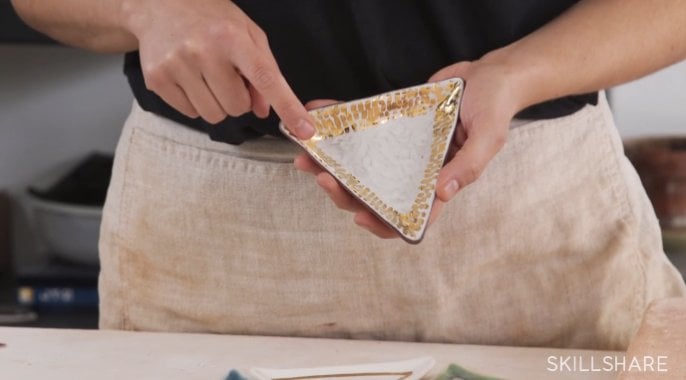
Ceramics At Home: Building Dishes By Hand is a concise Skillshare class that introduces practical hand-building approaches for creating functional, decorative dishes without a wheel. Taught by Emily Reinhardt, it demonstrates slump-mold, slab, and pinch-and-coil forming alongside glazing and painted surface work so learners can complete hand-built pieces from start to finish.
The course targets beginners and creative hobbyists seeking focused demonstrations and a short hands-on project to practice studio techniques. It highlights accessible materials and step-by-step workflows while making clear that kiln access or a community studio is needed to fire and finish completed pieces.
At a Glance
Ceramics At Home: Building Dishes By Hand is a Skillshare class that demonstrates several hand-building approaches for making functional dishes without a pottery wheel. Taught by Emily Reinhardt, it walks through building, finishing, glazing, and adding painted details so learners can create their own handcrafted pieces.
| Level | Beginner |
| Rating | 4.6 out of 5 |
| Duration | 20+ minutes |
| Languages | English |
| Learners | 5K+ students |
| Certificate | No certificate |
| Access | Access for as long as your subscription is active |
| Course includes |
|
| Price | Included with subscription |
What This Course Teaches
These lessons translate into concrete, demonstrable competencies in hand-building ceramics, from forming basic shapes to finishing and decorating functional dishes. By the end of the class learners should be able to design and execute a hand-built dish, apply slump-, slab-, and coil-based construction techniques, prepare pieces for firing, and apply glazing and painted surface details.
How the Course Is Structured
The class is arranged as a short sequence of demonstration lessons: there are 8 lessons in total, with a combined runtime of about 28 minutes, presented as compact videos that move from basic forming through finishing and surface decoration.
The lessons are organized by hand-building method (slump, slab, pinch/coil) followed by practical finishing steps like prepping for firing, glazing, and adding painted details.
Curriculum overview
01Introduction▾
02Hand Building: Slump Mold▾
03Hand Building: Slab Build▾
04Hand Building: Pinch and Coil▾
05Prepping Your Pieces for Fire▾
06Glazing▾
07Adding Detail and Design▾
08More Creative Classes on Skillshare▾
Audience & Requirements
The class is aimed at beginners and creative hobbyists who want to learn hand-building approaches for making functional dishes without relying on a pottery wheel. It suits makers who prefer short, technique-focused demonstrations to quickly practice slump-, slab-, and coil-based construction and surface finishing.
- Creative hobbyists exploring ceramics and small-scale handmade goods.
- Beginners learning hand-building techniques without a pottery wheel.
- Makers who want to design and produce simple functional dishes or gifts.
- Students or studio newcomers preparing for kiln-based finishing.
- No special prerequisites; suitable for complete beginners.
- Basic hand-building materials (clay and hand tools such as a rib, needle tool, and rolling surface).
- Access to a kiln or a local studio/service to fire and finish pieces.
- Glazes or underglazes and brushes for surface decoration.
Note: The instructor demonstrates firing using a personal kiln; if you don’t have kiln access at home, plan to use a community studio or firing service to complete fired pieces.
Final Verdict
It’s a practical, low-commitment way for hobbyists to learn hand-building techniques and complete a simple dish project. Given its strong rating and broad learner reception, the class is good value for anyone already using the platform’s subscription service.
Recommended for beginners and creative makers who want focused demonstrations and quick practice; less suitable for learners seeking formal certification or in-depth kiln-firing instruction without local firing access.