
Accounting Fundamentals: Understanding Financial Statements
Read and use core financial statements with confidence
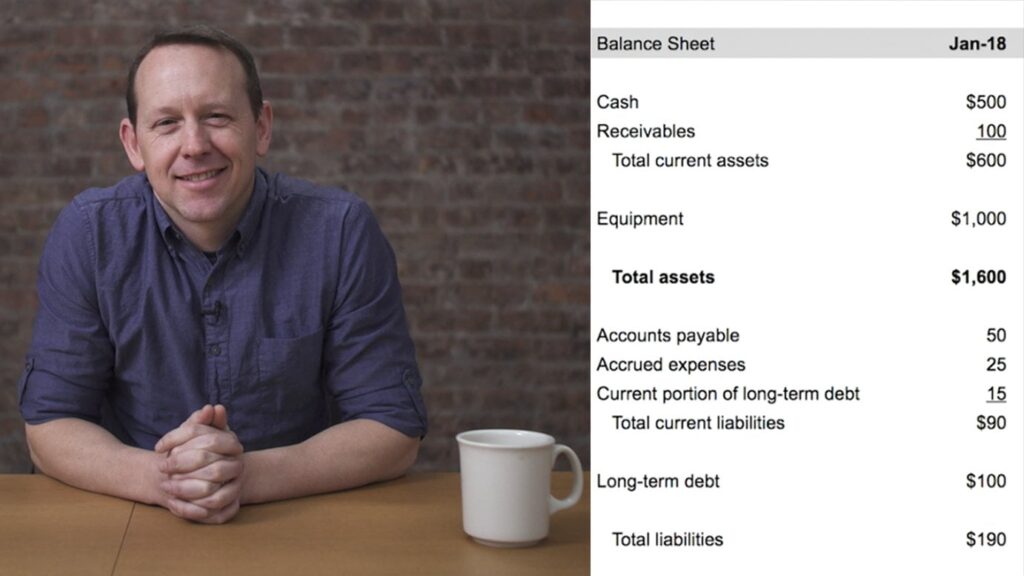
This concise course on accounting fundamentals teaches how to read and interpret core financial statements, including income statements, balance sheets, and cash flow statements, in plain language for non-specialists. It breaks down each statement into clear, practical steps so learners can analyze business performance and verify the relationships between revenue, expenses, assets, liabilities, and cash.
The class emphasizes hands-on application with a spreadsheet-based project and practical examples that contrast accrual and cash accounting, enabling learners to apply methods to real small-business or managerial scenarios. Expect a skills-first approach focused on financial reporting literacy rather than advanced accounting theory.
At a Glance
This Skillshare class introduces the fundamentals of reading and interpreting the main financial statements used to evaluate a business’s financial position.
It’s taught by Matt Cooper, who explains accounting concepts in accessible, non-technical language.
| Level | Beginner |
| Rating | 4.6 out of 5 |
| Duration | 40+ minutes |
| Languages | English |
| Learners | 10K+ students |
| Certificate | No certificate |
| Access | Access while subscription is active |
| Course includes |
|
| Price | Included with subscription |
What This Course Teaches
This course frames outcomes as measurable competencies: learners will be able to explain and prepare the three core financial statements, perform basic revenue and reconciliation calculations, and apply those results using a spreadsheet-based project. Emphasis is on constructing and interpreting income statements, balance sheets, and cash flow statements with clear, repeatable methods.
How the Course Is Structured
The class is organized as a short sequence of lessons that together form a concise introduction to reading financial statements.
Total runtime is roughly 40 minutes across 10 lessons, making the course suitable for a focused, single-session overview.
Curriculum overview
01 Introduction ▾
Sets expectations for the course and outlines the three core financial statements learners will study.
02 Getting Started ▾
Introduces the basic approach for reading statements and how to use the course materials effectively.
03 Accrual vs Cash Accounting ▾
Explains the differences between accrual and cash accounting and the practical implications for reporting revenue and expenses.
04 Calculating Revenue ▾
Covers methods to calculate topline revenue, including common adjustments like returns or discounts.
05 Income Statements: Part One ▾
Introduces the structure and primary components of an income statement.
06 Income Statements: Part Two ▾
Extends the income statement discussion with examples and reconciliation of key line items.
07 Balance Sheets ▾
Explains how to assemble a balance sheet and ensure assets, liabilities, and equity reconcile.
08 Cash Flow Statements ▾
Walks through cash flow statement categories and how operating, investing, and financing activities affect cash.
09 Final Thoughts ▾
Provides concluding remarks and practical suggestions for applying the concepts in real settings.
10 More Business Classes on Skillshare ▾
Points learners to related Skillshare classes and additional resources for continued learning.
Audience & Requirements
The class targets learners who need a practical, non-technical introduction to financial statements — for example small-business owners, startup founders, students, and professionals in non-finance roles who must interpret basic reports.
No prior accounting experience is required; the course assumes only basic numeracy and offers a spreadsheet project for hands-on practice.
- Small-business owners wanting to understand their financials
- Startup founders and solo entrepreneurs who monitor cash and revenue
- Non-finance professionals (marketing, product, operations) who read reports
- Students or career switchers seeking a practical accounting primer
- No special prerequisites or prior accounting coursework
- Basic comfort with numbers and elementary arithmetic
- Familiarity with spreadsheets (Excel or Google Sheets) recommended
- Skillshare subscription to access the class content
Final Verdict
This short class is a practical, time-efficient primer for beginners and non-finance professionals who need to read and use basic financial statements. Given its solid rating and broad learner base, it’s a dependable way to gain immediately applicable skills without a major time investment.
Because the course is delivered through a subscription platform and does not provide a formal certificate, it represents especially good value for learners who already use that service or who want conceptual competence rather than credentialing. If you need an accredited certificate or deeper technical accounting training, follow this with a longer, credentialed program.



 LinkedIn Learning