
Sun Tzu’s Art of War
Apply Sun Tzu’s strategy to everyday leadership and career decisions
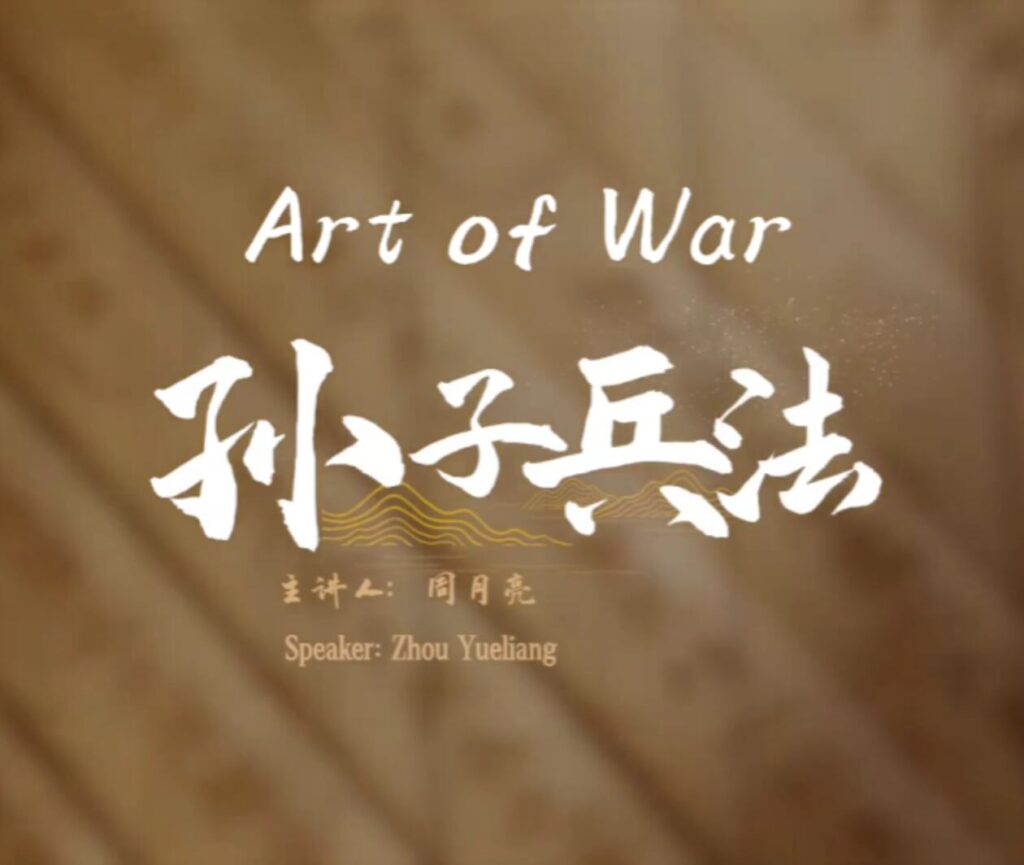
This course adapts Sun Tzu’s Art of War for contemporary professional use, translating classical strategy into practical lessons on leadership, decision‑making, and adaptability in organisational contexts. It emphasizes strategic assessment using the Five Factors and shows how to apply ancient concepts to modern workplace challenges.
Offered by the Communication University of China, the program combines short lectures, case studies, and reflection exercises to build measurable competencies in strategic thinking and ethical leadership. Learners practice applying principles such as deception, momentum, and terrain metaphors to real‑world problems to improve judgement and competitive positioning.
At a Glance
This course adapts the strategic teachings of Sun Tzu’s Art of War for modern professional settings, translating classical military principles into guidance for leadership, decision-making, and personal development.
It is delivered by instructors at the Communication University of China and frames Sun Tzu’s ideas through case studies, reflection exercises, and guided discussion to help learners apply strategy to workplace challenges.
| Level | Beginner |
| Rating | 4.6 out of 5 |
| Duration | 10+ weeks |
| Languages | English |
| Certificate | CPD-accredited certificate available |
| Access | Immediate access on enrollment; access for the course duration |
| Course includes |
|
| Price | Free to access with optional paid certificate |
What This Course Teaches
Learners complete the course with specific, measurable competencies in strategic assessment, adaptive decision-making, and leadership grounded in Sun Tzu’s principles.
By the end of the course, learners can analyze situations using the Five Factors, apply strategic frameworks to workplace decisions, and implement adaptive tactics to convert disadvantages into opportunities.
How the Course Is Structured
The course is organised into ten weekly modules that comprise 40 numbered lectures, a standalone introductory session, and an epilogue, delivered as short topical lessons and guided discussions.
In total the syllabus spans roughly ten weeks of material and is presented as a sequence of focused units you progress through week by week.
Curriculum overview
01 Introduction to Sun Tzu’s Art of War ▾
Welcome and course orientation, introducing the aim of applying Sun Tzu’s strategic ideas to leadership and personal development.
02 The Strategic Essence of The Art of War ▾
Overview of The Art of War as a foundational text on strategy and its relevance for non-military contexts.
03 Assess the Five Factors Before Battle ▾
Introduces the Five Factors (Way, Heaven, Earth, Commander, Method) as a framework for situational assessment.
04 The Importance of the Five Things ▾
Detailed discussion of the five elements—way, timing, place, general, and law—and how they shape strategic choices.
05 Victory Depends on Deception and Adaptation ▾
Explores deception and rapid response as core strategic tools for gaining advantage in changing conditions.
06 A General Must Possess Five Virtues in Balance ▾
Introduces the five leadership virtues—benevolence, wisdom, fidelity, courage, and law—and their balanced role in command.
07 Balance Planning with Flexibility in Battle ▾
Covers how to combine large-scale planning with on-the-ground flexibility to respond to unforeseen changes.
08 A Protracted War Drains a Nation ▾
Discusses the costs of prolonged conflict and the importance of efficient, decisive strategy to conserve resources.
09 Victory Means Strengthening the Nation ▾
Frames victory as a means to national prosperity, emphasising strategic ends over conflict for its own sake.
10 Take Grain from the Enemy to Sustain Your Forces ▾
Examines logistical strategy and the pragmatic use of resources captured or repurposed from opponents.
11 Subdue the Enemy Without Fighting ▾
Presents the hierarchy of strategies that achieve objectives by defeating plans and alliances before open conflict.
12 Win Complete Victory Without Attacking Cities ▾
Explores principles for achieving decisive outcomes while minimising destructive confrontation with strategic restraint.
13 Victory Depends on the Opponent ▾
Covers how to secure invincibility through preparation and then exploit opponent weaknesses when they appear.
14 Create Overwhelming Advantage Before Battle ▾
Discusses building decisive positional or resource advantages before engaging to reduce risk in execution.
15 Qi and Zheng: Interdependent and Endless in Combination ▾
Introduces the interplay of formless momentum (qi) and structured force (zheng) in creating strategic effect.
16 Cultivate Shi Like a Stone Rolling Down a Mountain ▾
Examines how to build momentum and favourable potential (shi) that compounds toward decisive outcomes.
17 Strike Xu, Avoid Shi, and Control the Enemy ▾
Covers targeting opponent weaknesses (xu) while avoiding their strengths (shi) as a core tactical approach.
18 Be Elusive and Intangible Like a Formless Force ▾
Looks at elusiveness and unpredictability as strategic advantages drawn from classical thought.
19 Cut Off One Finger Rather Than Injure Nine ▾
Explains selective, minimal-cost interventions that achieve strategic goals while limiting collateral harm.
20 Adapt to Shifting Conditions Like Water ▾
Focuses on flexible adaptation to changing circumstances, modelled on the metaphor of water.
21 Turn Disadvantages Into Advantages by Taking Detours ▾
Covers using indirect approaches and detours to convert apparent weaknesses into strategic opportunities.
22 Weigh Gains and Losses, Adapt to Circumstances ▾
Emphasises cost–benefit reasoning and measured timing when deciding whether to act or hold back.
23 Three Levels of Command: Morale, Mind, and Force ▾
Introduces three command dimensions—morale, psychological factors, and physical force—and how they interact strategically.
24 Weigh Both Benefits and Harms in Decision-Making ▾
Focuses on holistic evaluation of benefits and risks as the basis for sound strategic choice.
25 Weigh Advantages and Disadvantages ▾
Continues the theme of balanced judgement by examining trade-offs that inform tactical moves.
26 March Through Valleys, Camp on High Ground ▾
Practical guidance on positioning and movement that leverages terrain and timing for advantage.
27 Choose High, Dry, Sunny Terrain for Camping ▾
Uses terrain and logistics metaphors to illustrate how environment affects organisational health and supply.
28 Observe Enemy Actions to Reveal True Intentions ▾
Teaches observational techniques for reading competitors’ behaviour and timing responses to avoid traps.
29 Balance Leniency with Discipline in Command ▾
Covers leadership styles and the balance between empathy and discipline in managing groups.
30 Terrain Dictates Victory or Defeat ▾
Examines the decisive role of context and environment in shaping strategic possibilities and limits.
31 Advance and Retreat for the Nation, Not for Fame ▾
Discusses motive and humility in strategic choices—acting for collective benefit rather than personal acclaim.
32 Know Your Troops and the Enemy, and Fear No Battle ▾
Stresses situational awareness and preparation so decision-makers are not confused in action.
33 Death Ground Makes Soldiers Fight to Live ▾
Explores high-stakes scenarios that force decisive commitment and the psychological dynamics that follow.
34 Preserve Internal Unity, Dismantle Enemy Cohesion ▾
Addresses organisational cohesion—how to maintain unity internally while disrupting rival alliances and plans.
35 Management of the Army ▾
Covers practical management practices for leadership and maintaining effective group performance.
36 Wariness of the Lone-Wolf Strategy ▾
Analyses the risks of isolated, purely force-driven approaches and the value of alliances and coordination.
37 Be Quiet as a Virgin, and Quick as a Hare ▾
Describes tactics of concealment and rapid, targeted action to catch opponents off guard.
38 Fire: The Decisive Weapon of Mass Destruction ▾
Uses the historical example of fire to discuss decisive, large-scale tools and their ethical and strategic implications.
39 Wage War Only for Clear Gain, Never from Anger ▾
Advocates measured, interest-driven decision-making over emotion-driven action when stakes are high.
40 Avoid Gaining Intelligence Through Speculation ▾
Emphasises rigorous intelligence practices and warns against inference based on weak analogies or superstition.
41 Only the Sage and the Wise Can Use Spies ▾
Discusses the ethical and practical demands of intelligence work and who is suited to wield it responsibly.
42 Epilogue: Applying the Art of War to Your Life ▾
Final reflections and practical suggestions for integrating Sun Tzu’s planning, adaptability, and leadership principles into daily work and career decisions.
Audience & Requirements
The course targets professionals and learners who want to translate classical strategy into practical workplace tools.
It is suitable for early- to mid-career professionals, managers, entrepreneurs, and readers of Chinese philosophy who want concise frameworks for leadership and decision‑making.
- Professionals at any career stage seeking strategic decision-making frameworks.
- Mid-career managers and team leaders aiming to improve leadership under uncertainty.
- Entrepreneurs and business founders looking for competitive and resource strategies.
- Students and readers of Chinese philosophy interested in practical application.
- No special prerequisites.
- Willingness to engage in reflection exercises and case‑study analysis.
- Readiness to participate in online discussions and apply lessons to workplace scenarios.
Note: Although the course lists no formal prerequisites, the syllabus is detailed and spans many modules; expect a sustained weekly commitment to engage with lectures, reflections, and discussions.
Final Verdict
For professionals and leaders seeking conceptual frameworks for strategic thinking, this course provides strong practical value tied to an accessible enrollment model and a recognised CPD credential. It is recommended for early- to mid-career managers, entrepreneurs, and anyone who wants to adopt Sun Tzu’s frameworks to improve decision-making and leadership.
It is less suitable for learners seeking technical, hands-on training or role-specific tactical skills, as the syllabus emphasises strategic thinking and reflective application across many modules. Given the course’s strong user rating, credentialing option, and free-to-access audit model with an optional paid certificate, it represents a low-risk way to add credible strategic tools to your professional toolkit.


 LinkedIn Learning