
TypeScript Fundamentals
Learn to write safer, maintainable TypeScript code.
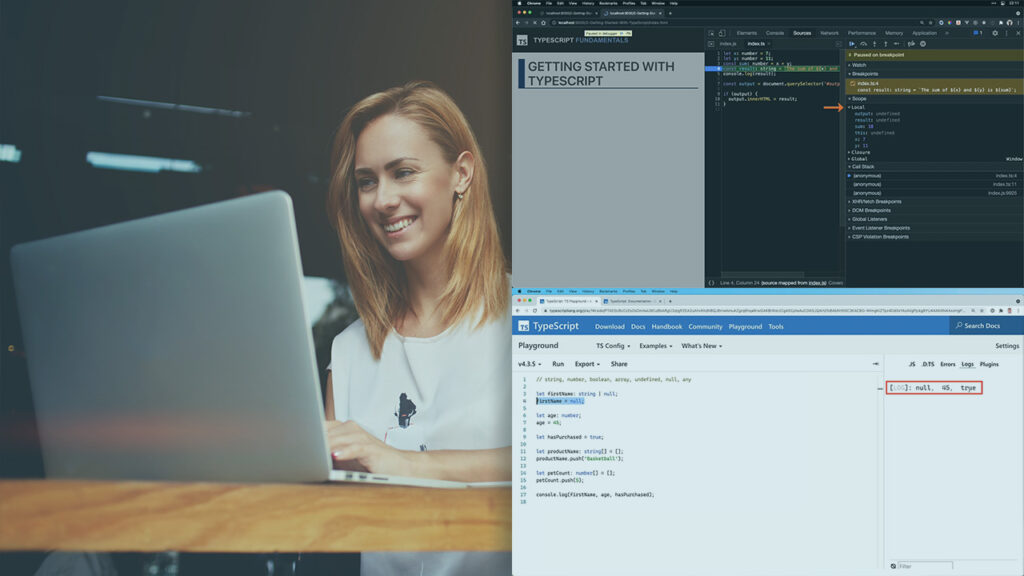
TypeScript Fundamentals is a focused, hands-on introduction for JavaScript developers that walks through TypeScript’s essential features — types, interfaces, classes, and generics — while demonstrating common tooling and debugging workflows used in real projects.
It emphasizes static typing and compile-time checks as practical techniques to catch errors earlier and make codebases more maintainable. Ideal for developers familiar with JavaScript, the course guides learners to implement typed functions, model data with interfaces, structure classes, and design reusable generics so they can reduce runtime bugs and organize scalable code.
At a Glance
TypeScript Fundamentals is an introductory course that teaches the core concepts and practical features of TypeScript for building both small and large applications.
It is taught by Dan Wahlin and John Papa and covers TypeScript basics such as types, interfaces, classes, generics, and common tooling and debugging workflows.
| Level | Beginner |
| Rating | 4.6 out of 5 |
| Duration | 3+ hours |
| Languages | English |
| Certificate | Certificate of completion |
| Access | Included with subscription; access while subscription is active |
| Course includes |
|
| Price | Subscription-based; monthly or annual plans |
What This Course Teaches
Outcomes are framed as concrete, testable skills you can apply to real projects rather than abstract topics.
By course end learners should be able to implement TypeScript features to reduce runtime bugs, organize code with strong typing, and build small sample applications that demonstrate reusable patterns.
How the Course Is Structured
The course is organized as a short, focused sequence of modules that begin with orientation and tooling and then progress through core TypeScript topics from basic types to advanced patterns like generics.
The syllabus contains 7 modules and runs approximately 3+ hours in total, with each module composed of several short lessons and demonstrations.
Curriculum overview
01Course Overview▾
Sets expectations for the course, introduces instructors, and outlines the sample applications used throughout the lessons.
02Getting Started with TypeScript▾
Covers installation, tool setup, a Hello World example, building and debugging workflows, and how to access the course code.
03Using Variables, Types, and Enums▾
Introduces the rationale for static types, built-in type categories, declaring typed variables, and creating and using enums.
04Creating and Using Functions▾
Explains typed function signatures, parameter variants (optional, default, rest), arrow and asynchronous functions, and return type annotation.
05Creating and Using Interfaces▾
Describes how to define interfaces, apply them to object shapes, and the distinctions between interfaces and type aliases.
06Creating and Using Classes▾
Covers creating classes with constructors, properties, and methods, plus extending classes and implementing interfaces on types.
07Creating and Using Generics▾
Introduces generics for functions, interfaces, and classes, including constraints and built-in generic patterns for reusable, type-safe code.
Audience & Requirements
The course is aimed at developers who want to adopt TypeScript to improve code quality and maintainability, with a syllabus that assumes practical programming experience rather than absolute beginners to coding.
Typical learners include JavaScript developers, front‑end engineers, Node.js backend developers, and maintainers of growing codebases who need stronger typing and earlier error detection.
- JavaScript developers adopting static typing
- Front‑end engineers using modern frameworks who want type safety
- Backend Node.js developers seeking safer server‑side code
- Maintainers of medium‑to‑large codebases aiming to reduce runtime bugs
- Basic familiarity with JavaScript and ESNext syntax
- A code editor (Visual Studio Code recommended)
- Comfort with basic command‑line tasks and installing packages
Final Verdict
TypeScript Fundamentals is a concise, practical, and well-rated introduction that I recommend for JavaScript developers and engineers who want to adopt TypeScript to reduce runtime bugs and improve maintainability.
Because the course is delivered via a subscription platform and includes a certificate of completion, it offers strong ongoing value for learners or teams who expect to use the platform regularly; those seeking a single one‑off purchase should consider whether the subscription model fits their needs.


 Codecademy