Python Essential Training
Learn to write Python scripts and small applications
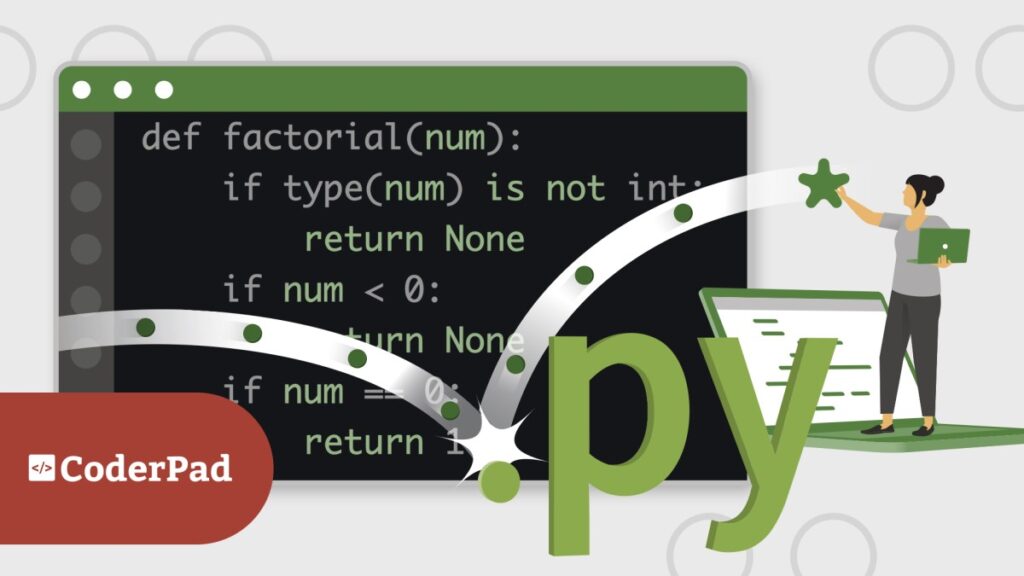
Python Essential Training introduces learners to core Python programming concepts and practical workflows, covering environment setup, writing scripts, and key language features such as data types, control flow, functions, classes, and error handling.
The course emphasizes hands-on skills—using pip and Jupyter Notebook, manipulating lists, dictionaries, and comprehensions, working with files and formats like CSV and JSON, and packaging code into modules—so you can build and run useful Python programs and small utilities.
At a Glance
Python Essential Training is a beginner-focused online course taught by Ryan Mitchell that introduces the core skills needed to start programming in Python.
The course walks through installing Python and common tooling, fundamental language constructs, basic data structures, control flow, functions, classes and objects, error handling, threading, file formats, and packaging so learners can build small programs and scripts.
| Level | Beginner |
| Rating | 4.7 out of 5 |
| Duration | 4+ hours |
| Languages | English |
| Certificate | Certificate of Completion (shareable) |
| Access | Access while your LinkedIn Learning subscription is active |
| Course includes |
|
| Price | Included with LinkedIn Learning subscription |
What This Course Teaches
The outcomes are described as concrete skills learners can demonstrate by writing, running, and packaging small Python programs.
Learners complete the course able to set up their Python environment, implement core language features, and apply data structures, object-oriented design, error handling, basic concurrency, file handling, and packaging to practical tasks.
How the Course Is Structured
The course is organized as a linear sequence of short, focused sections, with a mix of demonstrations, short exercises, and solution walkthroughs.
It comprises 13 sections made up of roughly 54 short video lessons in total, with a combined runtime of about 4 hours and 23 minutes.
Curriculum overview
01Introduction▾
Orientation material, course logistics, and brief setup notes to prepare learners for the lessons.
02Gearing Up for Python▾
Introduces foundational tooling and workflow, including installing Python and using interactive environments such as Jupyter and Coderpad.
03Quickstart▾
A concise walkthrough of core language elements and a short hands-on challenge to apply them.
- Challenge: Factorials (solution provided)
04Basic Data Types▾
Covers numeric types, booleans, strings, and bytes with brief examples and practice.
- Exercise solution: Converting hex to decimal
05Basic Data Structures▾
Introduces lists, tuples, sets, dictionaries, and comprehension syntax for compact data processing.
- Exercise solution: Encoding ASCII art
06Control Flow▾
Explains conditional logic and loop constructs and shows how to apply them in small algorithms.
- Exercise solution: Finding primes faster
07Functions▾
Examines function definition, scope, and higher-order usage with short examples and a practice problem.
- Exercise solution: Sum of triangles
08Classes and Objects▾
Introduces object-oriented basics including class anatomy, methods, and inheritance through guided examples.
- Exercise solution: Drawing shapes
09Errors▾
Discusses exceptions, handling patterns, and custom exception design with illustrative code snippets.
- Exercise solution: Bad arguments
10Threads and Processes▾
A compact overview of concurrency concepts, contrasting multithreading and multiprocessing and their basic uses.
11Working with Files▾
Shows file I/O patterns and working with common formats such as CSV and JSON, with a practical example.
- Exercise solution: Compressing ASCII art
12Packaging Python▾
Covers parsing command-line arguments and creating modules and packages to organize reusable code.
13Conclusion▾
Wrap-up material and a short Python challenge project to consolidate learning.
- Capstone: Python challenge project
Audience & Requirements
This course targets beginners and self-directed learners who want practical, work-ready Python skills for scripting, data handling, and small applications.
- Beginners seeking a structured introduction to Python programming.
- Professionals who want to automate tasks or process files with scripts.
- Students preparing for more advanced Python coursework or projects.
- Hobbyists building small programs, data parsers, or simple utilities.
- No prior programming experience required.
- Ability to install and run Python, pip, and Jupyter Notebook (the course demonstrates installation).
- Optional: a code editor or IDE (for example, Visual Studio Code) to run scripts outside notebooks.
Note: The syllabus includes topics like concurrency and packaging that can be conceptually dense for absolute beginners, so expect to spend extra time on those modules if you have no prior coding experience.
Final Verdict
Python Essential Training is a dependable, beginner-oriented introduction that delivers practical, transferable Python skills and is worth taking for learners who need a concise, work-ready foundation.
The course represents good value given its positive reception, broad learner adoption, and a shareable completion certificate available through the platform’s subscription access; it suits beginners, professionals wanting to automate tasks, and hobbyists building small programs. Learners seeking deep specialization or advanced, production-grade topics should view this as an early step and follow it with project work or more advanced courses.


 Codecademy