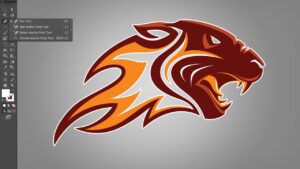
Adobe Illustrator CC: Advanced Training
Level up your Illustrator skills and speed up your workflow
Adobe Illustrator CC: Advanced Training is a focused, practical course that expands on core Illustrator skills with advanced vector techniques, typographic controls, gradient and color systems, and distortion/3D effects. It is designed for users who already know the basics and want to master production workflows, precision drawing, and creative effects in Adobe Illustrator.
The curriculum emphasizes hands-on projects and workflow acceleration, covering tools like the Pen and Shape Builder, Freeform and gradient techniques, image masking, and AI-assisted recolor and pattern features to produce portfolio-ready assets. Learners should expect pragmatic export and asset-preparation practices alongside shortcut-driven productivity tips that apply directly to professional design work.
At a Glance
Adobe Illustrator CC: Advanced Training is an advanced course taught by Dan Scott that deepens practical Illustrator skills beyond the basics. It focuses on advanced tools, creative workflow techniques, project-based exercises, and AI-assisted features to help experienced users expand their toolset and speed up production.
| Level | Intermediate |
| Rating | 4.6 out of 5 |
| Duration | 2+ hours |
| Languages | English |
| Certificate | No certificate provided |
| Access | Access for as long as your subscription is active |
| Course includes |
|
| Price | Included with subscription |
What This Course Teaches
Outcomes are framed as measurable competencies you can perform in real projects, from AI-assisted vector workflows to complex type and color systems. By course end learners can apply specific Illustrator tools and production workflows to build portfolio-ready graphics and export-ready assets.
How the Course Is Structured
The course is organized as a sequence of focused lessons that each target a distinct advanced Illustrator feature or workflow, presented as short, practical modules suitable for self-paced study.
Total runtime is 2+ hours of on-demand video delivered across 63 concise lessons, with downloadable exercise files to practice alongside each topic.
Curriculum overview
01How to use Text to Vector Ai▾
Shows how to convert typographic elements into editable vector shapes using AI-assisted tools.
02How to use Text to Pattern Ai▾
Demonstrates creating repeatable patterns from text with AI-driven pattern features.
03How to use Generative Recolor▾
Covers using generative recolor to explore and apply new color palettes across artwork.
04When to use the Scissor Tool, Eraser Tool & Knife Tool▾
Explains appropriate use cases and practical techniques for cutting and trimming vector paths.
05Advanced Shape Builder Uses▾
Teaches advanced Shape Builder workflows to combine and subtract complex shapes efficiently.
06The differences between the Pathfinder Vs Shape Builder▾
Compares Pathfinder and Shape Builder to choose the best tool for different vector operations.
07How to use the Join tool & Joining Path Ends▾
Demonstrates joining path ends and cleaning up anchor points for seamless vector outlines.
08Advanced Pen Tool Tricks▾
Covers precision path creation and control-point manipulation with advanced Pen tool techniques.
09Width Tool Advanced Techniques▾
Shows how to apply and edit variable stroke widths for expressive line work.
10The Curvature Tool▾
Introduces curvature-based path creation for smoother, faster shape drawing.
11How to master corners with corner widget effects▾
Explains corner widgets and how to control corner styles on live shapes and paths.
12How to work with Compound Paths▾
Shows creating and editing compound paths to build complex cutouts and shapes.
13The difference between Expand & Expand Appearance▾
Clarifies when to use Expand versus Expand Appearance to finalize editable artwork.
14How to create Graphic Styles▾
Covers building and applying Graphic Styles for consistent reusable appearances.
15How to make Symbols▾
Demonstrates creating symbols and using them to speed repetitive artwork production.
16How to use the Smooth Tool▾
Shows smoothing techniques to refine hand-drawn or noisy vector paths.
17Advanced use of Simplify Path▾
Explains reducing path complexity while preserving shape for cleaner vectors.
18What Live Shape Effects are for▾
Introduces live shape effects and using them to keep artwork editable and flexible.
19How to make Repeating Grids & Concentric Circles▾
Demonstrates techniques for generating repeating layouts and concentric constructions.
20How to make Random Objects▾
Covers methods to generate randomized shapes and distributions for organic compositions.
21Advanced Keyboard Shortcuts in Illustrator▾
Teaches shortcut strategies to accelerate routine tasks and navigation in Illustrator.
22How to add a Gradient on a Stroke▾
Shows applying and editing gradient fills along stroke paths for stylized edges.
23How to add a Gradient in Text▾
Demonstrates adding gradients to type and managing appearance for legibility and effect.
24How to use the Freeform Gradient tool▾
Introduces Freeform Gradient workflows for nuanced color transitions within shapes.
25How to use Advanced Color Swatches▾
Covers building and managing complex swatch libraries for consistent color use.
26How to use Global Color Swatches▾
Shows using global swatches to update color across multiple objects simultaneously.
27What is the difference between RGB vs CMYK color modes?▾
Explains color-mode differences and how to choose modes for screen versus print outputs.
28How to proof colors▾
Covers soft-proofing and practical steps to verify color fidelity before export or print.
29How to use Pantone Spot Colors▾
Demonstrates selecting and applying Pantone spot colors within Illustrator workflows.
30Recolor Artwork & Changing all colors at once▾
Shows batch recolor techniques to update entire compositions quickly and consistently.
31How to use Blending Modes▾
Explains layer blending modes and how to use them to achieve composite visual effects.
32How to work with Images & Blending Modes▾
Demonstrates integrating raster images with vectors using blending modes and masks.
33How to make Black & White Images▾
Shows methods to convert imagery to effective black-and-white compositions inside Illustrator.
34Learn Advanced Workflow Tricks▾
Shares productivity tips and workflow adjustments to speed up design tasks.
35All the Super Selection Mastery▾
Teaches advanced selection techniques for efficiently targeting complex object sets.
36How to use the History Panel▾
Explains using the History panel to manage and revert recent editing steps.
37Advanced Fonts Tricks & Tips▾
Covers advanced typographic controls and font-management strategies.
38Use Retype to know what Font is being used▾
Demonstrates using Retype and related tools to identify and swap fonts in artwork.
39How to put Text Inside a Letter or Shape▾
Shows techniques for flowing or masking text inside letterforms and complex shapes.
40How to use the Touch Type Tool▾
Covers Touch Type for individual glyph manipulation and advanced typographic tweaks.
41How to add a Connected Stroke Around Multiple Shapes▾
Explains creating continuous strokes that wrap or connect across several shapes.
42How to Offset a Stroke with Text▾
Shows offsetting strokes on text for outlined and layered typographic effects.
43How to make a Bar Chart in Illustrator▾
Demonstrates building and styling bar charts natively within Illustrator.
44How to make a Pie Chart in Illustrator▾
Covers creating and customizing pie charts and legend elements for documents.
45Layer Power Moves▾
Teaches layer-management techniques to keep complex files organized and editable.
46Advanced Artboard & Pages Tricks▾
Explains using artboards and multi-page setups for multi-output projects.
47How to Unlink vs Embedded Images▾
Discusses pros and cons of linked versus embedded images and when to use each.
48How to Crop Images Rather than Mask▾
Shows methods to crop raster imagery directly and compare to masking workflows.
49How to Mask Inside Text & Multiple Shapes▾
Demonstrates masking techniques that place imagery or gradients inside text and shapes.
50How to you use the Puppet Warp Tool▾
Explains Puppet Warp controls for subtle deformation and character posing of vector artwork.
51How to use the Distort Envelope Shape & Type▾
Covers envelope distortions applied to shapes and text for stylized transformations.
52How to use the Envelope Mesh▾
Demonstrates using envelope meshes to warp complex artwork with mesh points and handles.
53How to blend lines together▾
Shows Blend tool techniques for constructing smooth interpolations between paths.
54How to make a Linocut Effect▾
Demonstrates steps to emulate linocut and relief-print aesthetics in vector form.
55How to make 3D Gradient Lettering Blends▾
Shows combining gradients and 3D effects to produce dimensional typographic blends.
56How to spin text into a ring▾
Demonstrates text-on-path and transformation techniques to arrange type into circular forms.
57How to turn text into a 3D donut shape▾
Covers 3D extrusion and text-warping methods to create toroidal text effects.
58How to make a Duotone image effect▾
Shows producing duotone looks and controlling tonal mappings for stylistic imagery.
59How to make a Roughen Stamp Vector Effect▾
Demonstrates roughen and stamp techniques to create distressed vector textures.
60How to make a Neon Sign Glow Effect▾
Shows layering, glows, and gradients to simulate neon sign lighting effects.
61How to use a Halftone Effect using Plugins▾
Demonstrates producing halftone textures using plugin tools for stylized print looks.
62Advanced Exporting Assets Tricks in Illustrator▾
Covers exporting strategies and asset preparation for multiple platforms and formats.
63How to use the Dimension Tool▾
Introduces the Dimension tool and techniques for creating measured diagrams and callouts.
Audience & Requirements
This course targets creative practitioners who already have a basic working knowledge of Adobe Illustrator and want to level up to advanced techniques and production workflows. It is appropriate for self-taught users, graduates of an Illustrator essentials course, and designers seeking faster, more versatile vector workflows for portfolio and client work.
- Illustrators with basic Illustrator experience who need advanced tool and workflow mastery.
- Self-taught creatives seeking structured advanced techniques and shortcuts.
- Graduates of Illustrator Essentials courses aiming to expand their skillset.
- Design professionals wanting faster production methods and portfolio-ready effects.
- A licensed or trial copy of Adobe Illustrator compatible with the course exercises.
- Basic Illustrator familiarity (navigation, selection, basic drawing and paths).
- Recommended: prior completion of an Illustrator Essentials course or equivalent hands-on experience.
Note: The syllabus covers many specialized, advanced topics; learners with only minimal exposure to Illustrator should complete foundational training first to get the most from this course.
Final Verdict
This course is a solid choice for intermediate Illustrator users focused on practical, portfolio-oriented skills rather than formal credentials. The focused, advanced syllabus and generally strong reviews suggest it reliably teaches time-saving workflows and creative effects you can apply immediately.
If you already use the host platform, the subscription access model makes this an efficient way to level up; if you need a verified certificate or are a complete novice, prioritize a course that offers accreditation or foundational training first.



 Pluralsight