
3D Camera Tracking In Adobe After Effects
Learn to track and composite 3D elements in live footage
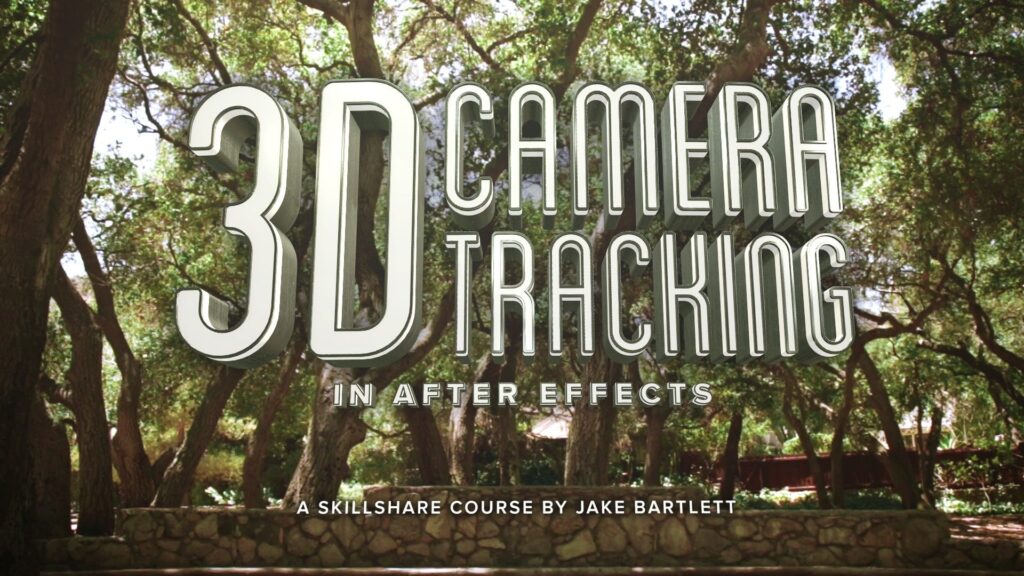
3D Camera Tracking In Adobe After Effects covers practical workflows for solving camera motion and integrating graphics or 3D models into live-action footage using Adobe After Effects. The lessons run through shooting considerations for reliable tracks, the built-in 3D Camera Tracker, and optional Cinema 4D Lite/Cineware steps for rendering and compositing animated models.
It emphasizes hands-on problem solving so learners can produce dependable camera solves, place perspective-correct assets, and diagnose common tracking failures. The course is aimed at motion-graphics artists, video editors, and filmmakers seeking applied tracking and compositing skills they can immediately use in real projects.
At a Glance
3D Camera Tracking In Adobe After Effects is a practical Skillshare class taught by a motion-graphics instructor who collaborates with his brother Aaron.
It focuses on shooting tips for trackable footage, an in-depth walkthrough of After Effects’ 3D Camera Tracker, troubleshooting common tracking issues, and compositing 3D objects via Cinema 4D Lite and the Cineware workflow.
| Level | Beginner to Intermediate |
| Rating | 4.6 out of 5 |
| Duration | 1+ hours |
| Languages | English |
| Learners | 10K+ students |
| Certificate | No certificate |
| Access | Access while your Skillshare subscription is active |
| Course includes |
|
| Price | Included with Skillshare subscription (subscription-based, monthly or annual plans) |
What This Course Teaches
Students complete the class with concrete, demonstrable competencies focused on camera solve accuracy and live-action integration.
By course end you will be able to plan and shoot footage for reliable tracking, apply After Effects’ 3D Camera Tracker to produce usable camera solves, and integrate 2D or 3D elements into scenes with believable perspective and occlusion.
How the Course Is Structured
The class is organized into 10 concise modules (short video lessons plus demonstrations) that lead into a hands-on final project, and the total runtime is roughly 1+ hours of video content.
Structure prioritizes a practical walkthrough: setup and shooting guidance, step-by-step tracking in After Effects, optional Cinema 4D Lite integration, then a culminating project to apply the workflow.
Curriculum overview
01Welcome & Course Overview▾
Introduces the class goals, project brief (track & composite a 3D robot or alternate asset), and required software.
02Shooting Tips for Tracking▾
Covers how to plan and shoot footage with camera motion and visual features that yield reliable 3D solves.
03Project Setup in After Effects▾
Walks through importing footage, composition settings, and preparing layers for camera tracking.
04Using the 3D Camera Tracker▾
Demonstrates running the 3D Camera Tracker, interpreting track points, and creating a solved 3D camera.
05Refining Camera Solves▾
Shows common solve issues and practical fixes to improve stability and accuracy of the tracked camera.
06Placing Objects on Flat Surfaces▾
Explains how to attach 2D or 3D objects to planar areas with correct perspective and scale.
07Inserting Graphics into Scene▾
Covers compositing flat graphics and motion elements into tracked footage so they read convincingly in 3D space.
08Introduction to Cinema 4D Lite▾
Provides a primer on Cinema 4D Lite for users who will import and render 3D models from C4D into After Effects.
09Cineware & 3D Model Integration▾
Shows how to use the Cineware plugin to composite animated C4D models, match lighting, and handle occlusion.
10Final Project: Track & Composite▾
Guides learners through building the final tracked composite using either the provided robot model or a substitute asset.
- Class project: Track & Composite A 3D Robot (or alternate asset)
- Post final video to project gallery
Audience & Requirements
This class targets motion-graphics artists, video editors, filmmakers, and creative hobbyists who want to add convincingly tracked 2D or 3D elements to live-action footage.
It is presented for learners with basic After Effects familiarity and scales to include optional Cinema 4D Lite integration for students who want to composite animated 3D models.
- Motion-graphics designers and After Effects users adding camera-tracked elements to projects.
- Videographers and indie filmmakers who want to composite graphics or 3D objects into live-action footage.
- Video editors and content creators seeking practical VFX workflows for perspective-correct inserts.
- Creative hobbyists learning to integrate 3D models or motion graphics into personal videos.
- After Effects CC or higher (required for the main tracking workflow).
- Access to Cinema 4D Lite and the Cineware plugin if you plan to follow the C4D sections (included with an Adobe Creative Cloud subscription).
- Basic familiarity with the After Effects interface and common compositing concepts is recommended.
- Video footage to track (your own shot footage or supplied sample clips) and a willingness to experiment with different shots.
- No prior Cinema 4D modeling experience is required to complete the After Effects-focused lessons.
Note: The course is compact but covers technically deep topics (camera solving and C4D integration); beginners should expect to supplement this class with further practice or follow-up tutorials to achieve advanced tracking and 3D modeling proficiency.
Final Verdict
For After Effects users, motion-graphics artists, and filmmakers who want a compact, hands-on path into camera solving and live-action integration, this class is a practical, efficient primer.
Given its strong community reception and focused syllabus, it delivers clear, applicable skills quickly and is especially valuable for learners who already use After Effects and plan to apply tracking workflows to real projects.
Because the course is offered through a subscription service and does not confer a formal certificate, it represents best value for active subscribers or learners intending to take multiple related classes; those looking for a standalone credential should weigh the access model before enrolling.


 Pluralsight

 LinkedIn Learning